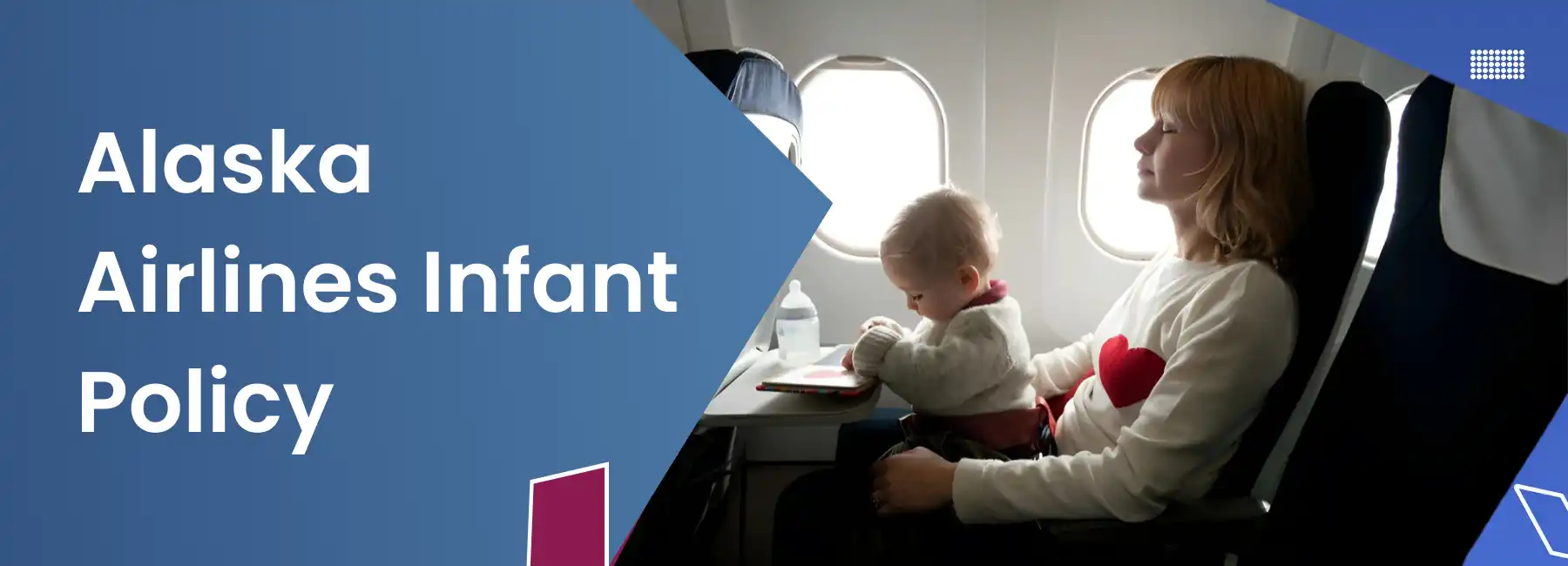
Traveling with a baby can feel overwhelming, but Alaska Airlines makes an effort to simplify the experience for parents. The airline has a clear infant policy covering lap travel, child safety seats, strollers, baggage allowances, and documentation requirements. Whether you’re flying on a short domestic route or an international connection, understanding Alaska infant travel rules will help you plan a smooth journey.
Overview of Alaska Airlines Infant Rules
Alaska Airlines defines infants as children under two years of age. Parents can either hold the baby on their lap for the duration of the flight (lap infant) or purchase a separate seat for the child and use an FAA-approved child safety seat. These two options differ in terms of cost, baggage allowance, and safety benefits.
Lap Infant Policy on Alaska Airlines
- Domestic Flights: Lap infants under two years old may fly for free when seated on an adult’s lap.
- International Flights: A reduced fare applies—typically 10% of the adult fare plus taxes and fees.
- One Infant Per Adult: Each ticketed adult may travel with only one lap infant. If traveling with two infants, a seat must be purchased for the second child.
- Age Verification: Alaska Airlines may require proof of age, such as a birth certificate or passport.
Parents are encouraged to add the lap infant at the time of booking to avoid issues at check-in. While adding your infant, take a moment to verify the date of birth is entered correctly. Even a one-digit error can cause check-in delays. Our guide on Alaska Airlines birth date correction shows exactly how to fix it before your travel day.
Purchasing a Seat for Infants
Although lap travel is allowed, Alaska Airlines recommends that parents purchase a separate seat for infants for enhanced safety. In this case:
- The infant must travel in an FAA-approved child restraint system (CRS) or car seat.
- Car seats must be installed in a window seat and cannot be used in emergency exit rows.
- The CRS should be labeled as approved for use in aircraft.
This option ensures better protection during turbulence and gives both the child and parent more comfort during long flights. In addition to purchasing a separate seat, parents can also explore options to upgrade to Alaska first class for extra space and comfort when traveling with infants.
Note: It’s important to review the Alaska Name Change Policy when traveling with infants. Any discrepancies in the infant’s or parent’s name on the ticket can lead to boarding delays. Make corrections as soon as possible to ensure a hassle-free check-in and smooth travel experience.
Alaska Airlines Bassinet Policy
Unlike some international carriers, Alaska Airlines does not offer onboard bassinets. Parents traveling with infants must plan accordingly by bringing a car seat or holding the baby on their lap. For long-haul travel, booking an extra seat with a CRS is the most comfortable solution.
Infant Baggage Allowance
Alaska Airlines provides generous baggage options for families traveling with children:
- Lap Infants: One diaper bag is permitted in addition to the adult’s carry-on allowance.
- Infants with a Ticketed Seat: Receive the same baggage allowance as their purchased fare.
- Free Items: Parents may check one stroller and one car seat per child free of charge.
- Gate-Check: Strollers and car seats can be checked at the gate for convenience.
Stroller and Car Seat Rules
Parents may use their stroller and car seat until boarding, after which they can gate-check them. Alaska Airlines allows:
- Umbrella strollers and collapsible models are to be stored in overhead bins if space permits.
- Heavier strollers to be checked free of charge.
- Car seats to be used on board only if they meet FAA guidelines.
Infant Meals and In-Flight Comfort
Alaska Airlines does not provide special baby meals. Parents are encouraged to:
- Bring formula, baby food, or milk in TSA-approved quantities.
- Carry extra diapers, wipes, bottles, and comfort items in the diaper bag.
- Feed the baby during takeoff and landing to ease ear pressure.
Flight attendants can provide hot water upon request, but families should plan to be self-sufficient.
Booking and Check-In with Infants
When booking a ticket, passengers must indicate that they will be traveling with an infant. Alaska Airlines requires:
- Proof of age for infants (birth certificate or passport).
- International flights: A valid passport for the infant, and possibly a visa depending on the destination.
- Consent letters: If only one parent is traveling internationally with the child, some countries may require notarized permission from the other parent.
International Infant Travel on Alaska Airlines
For international flights: Lap infant charges apply and vary depending on destination. Infants must have their own passports and meet the entry requirements of the destination country. Parents should check if vaccination or additional health documents are required. It's also worth knowing that international itineraries with connections carry added risk for families — deplaning with a baby, a stroller, and a car seat takes more time than standard boarding. If a delay on your first leg causes you to miss your connecting flight, Alaska's missed connecting flight policy explains your rebooking rights and what the airline is required to do for you.
- Lap infant charges apply and vary depending on destination.
- Infants must have their own passports and meet the entry requirements of the destination country.
Parents should check if vaccination or additional health documents are required.
Infant Seating Restrictions
Alaska Airlines enforces specific seating rules for safety:
- Infants are not permitted in emergency exit rows.
- Child safety seats may only be installed in window seats.
- Premium cabin seating may be restricted depending on the aircraft configuration.
Refunds and Cancellations for Infant Tickets
- Lap Infant Fees: Nonrefundable on international itineraries.
- Cancellations: If the adult ticket is canceled, the infant booking must also be updated.
- No-Show Policy: If parents fail to cancel an infant booking, associated fees are forfeited.
Alaska Airlines Infant Boarding and Assistance
Alaska offers early boarding for families with young children. This gives parents extra time to:
- Secure car seats and strollers.
- Store carry-on bags.
- Get infants settled before general boarding begins.
Parents needing additional help should notify staff at check-in or the gate. If you or a travel companion also requires mobility support during the journey, it is worth arranging this alongside your infant booking. You can find everything you need in the complete Alaska Airlines wheelchair assistance guide, which covers how to request airport help from curbside all the way to your seat.
Tips for Flying with Infants on Alaska Airlines
Book flights that align with your child’s nap or sleep schedule.
- Arrive at the airport early to manage security checks with baby gear.
- Carry extra clothes for both the baby and parents in case of spills.
- Request bulkhead seats if possible, for extra legroom and diaper bag access.
- Use Alaska’s mobile app to manage bookings and check in quickly with infants.
Help Desk
- Want to change or edit the name on your flight ticket? or
- Need to change or cancel your flight?